
Article: What Is a Meat Ager? The Complete Beginner’s Guide to Dry Aging at Home

What Is a Meat Ager? The Complete Beginner’s Guide to Dry Aging at Home
If you've ever ordered a dry-aged steak at a great steakhouse, you probably remember it. The flavor is deeper. The texture is remarkably tender. And there is a richness that sets it apart from the steak you typically bring home from the butcher or grocery store.
But what exactly makes dry-aged beef different? And perhaps more surprisingly: Can you actually dry age meat at home? With a purpose-built meat ager, the answer is YES!!
For home cooks who love steak, grilling, and experimenting with restaurant-level techniques, a meat-aging refrigerator opens the door to an entirely different culinary experience. Here is what you need to know before getting started.
What Is Dry Aging?
Dry aging is the process of storing meat—most commonly large cuts of beef—in a carefully controlled refrigerated environment for an extended period of time.
During that time, two important things happen. First, naturally occurring enzymes within the meat gradually break down proteins and connective tissue, helping create a more tender steak. At the same time, moisture slowly evaporates from the meat. As the meat loses moisture, its flavor becomes increasingly concentrated. The result?
A steak with greater tenderness, deeper beef flavor, and the distinctive complexity associated with a great dry-aged steakhouse steak.

So, What Is a Meat Ager?
A meat ager—or dry-aging refrigerator—is a specialized refrigeration appliance designed to create and maintain the specific environment needed for the dry aging process. While it may resemble a refrigerator from the outside, its purpose is quite different.
Dry aging requires much more than simply keeping meat cold. It requires controlled temperature, humidity, and air circulation throughout the aging process. A purpose-built meat ager is designed to manage these conditions far more precisely than an ordinary household refrigerator.
Depending on the model, meat agers may also incorporate specialized filtration, airflow systems, humidity management, UV sanitation features, and electronic controls. Think of it as a climate-controlled aging chamber for meat.

Why Can't I Just Use My Regular Refrigerator?
Your household refrigerator is designed to safely store many different foods while being opened and closed throughout the day. Its temperature, humidity, airflow, odors, and internal conditions fluctuate as part of normal use. Dry aging requires a much more controlled environment. There is another practical consideration: time.
A large cut of beef may occupy refrigerator space for weeks while it ages. Most households don't want a substantial portion of their everyday refrigerator devoted to an aging experiment. A dedicated meat ager solves both problems. It creates an environment specifically intended for aging while keeping the process separate from everyday food storage.
What Happens to Beef While It Ages?
This is where dry aging becomes fascinating. Over time, the exterior of the beef darkens and forms a dry outer layer. Meanwhile, moisture gradually leaves the meat and its natural enzymes continue their work. The flavor changes as the aging period progresses.
Younger dry-aged beef tends to retain a more traditional beef flavor while developing additional tenderness and concentration. With longer aging, the flavors can become considerably more pronounced and complex. Some enthusiasts describe longer-aged beef as developing nutty, buttery, earthy, or cheese-like characteristics.
That evolution is one reason dry aging has such a devoted following. You're not simply storing a steak. You're developing its flavor.
 How Long Does Dry Aging Take?
There isn't one perfect number.
The ideal aging period depends on the cut, the aging environment, and—most importantly—your personal taste. Around 30 days is a common entry point for experiencing noticeable dry-aged character. As aging continues toward 45 days and beyond, flavors generally become more concentrated and distinctive.
More adventurous enthusiasts sometimes age beef considerably longer. For a beginner, however, the goal shouldn't be to see how long you can age something. The fun is discovering what aging period produces the flavor you enjoy most. That experimentation is part of the appeal of owning a meat ager.
What Cuts of Beef Are Best for Dry Aging?
Dry aging is generally better suited to large, high-quality primal or subprimal cuts rather than individual steaks. Popular choices include rib sections and strip loins.
Why start large?
During dry aging, the outside develops a dried crust that is trimmed away before the meat is portioned into steaks. Starting with a larger cut provides enough interior meat to make that trimming practical. Fat coverage and marbling are also valuable because they help protect the meat while contributing to the rich flavor people associate with premium dry-aged beef. For your first attempt, a quality cut from a trusted butcher is a much better starting point than simply placing a few individual steaks into an aging cabinet.

What Does Dry-Aged Steak Taste Like?
This is ultimately why people do it. A traditionally aged steak can be delicious, but dry aging creates flavors and textures that are difficult to reproduce through seasoning or cooking technique alone. Depending on the meat and aging time, you may notice:
More concentrated beef flavor. As moisture is lost, flavor intensifies.
Greater tenderness. Natural enzymatic activity helps change the texture of the meat.
More complexity. Longer aging can introduce nutty, earthy, buttery, and savory notes.
And because flavor evolves with time, two steaks from the same original cut can taste surprisingly different when aged for different periods. For someone who loves cooking steak, that makes dry aging as much a culinary hobby as an appliance function.
Is Dry Aging at Home Safe?
It can be when performed using appropriate equipment, proper food-handling practices, and the manufacturer's operating instructions. But dry aging is not simply leaving meat in a refrigerator for several weeks. Temperature, humidity, sanitation, airflow, meat selection, and handling all matter. A purpose-built meat-aging appliance helps provide the controlled conditions required for the process, but it doesn't replace good food-safety practices.
Beginners should follow the instructions for their particular aging appliance and purchase meat from a reputable source. When in doubt about whether meat has been handled or aged safely, don't consume it.
Does Dry Aging Waste Some of the Meat?
Yes—and this surprises some first-time buyers. Meat loses weight during dry aging because moisture evaporates. The hardened exterior also needs to be properly trimmed before the beef is cut into steaks. That means the finished amount of edible beef will be less than the amount you originally placed in the aging cabinet. But that loss is part of what creates the experience. Water weight decreases, flavors concentrate, texture changes, and you're left with something substantially different from the cut you started with. For enthusiasts, the transformation is the point.
Who Is a Meat Ager Really For?
A meat ager isn't an essential appliance for every kitchen. But for a certain kind of home cook, that's exactly what makes it exciting. If you're the person who searches for the perfect steak, invests in a great grill, experiments with cooking temperatures, knows your favorite cuts, visits excellent steakhouses, or enjoys learning techniques normally associated with professional kitchens, a meat ager offers another level of experimentation. It also pairs beautifully with an outdoor cooking lifestyle. Imagine choosing a whole rib section, aging it yourself, trimming and cutting your own steaks, and then taking those steaks outside to a premium grill for the final sear. At that point, you're no longer simply grilling dinner.
You've been creating it for weeks.

What Should You Look for in a Home Meat Ager?
If you're considering purchasing one, don't choose based on appearance alone.
Capacity matters, particularly if you plan to age larger cuts. Look carefully at the manufacturer's temperature and humidity controls, airflow system, filtration or sanitation features, interior configuration, ease of cleaning, installation requirements, and warranty.
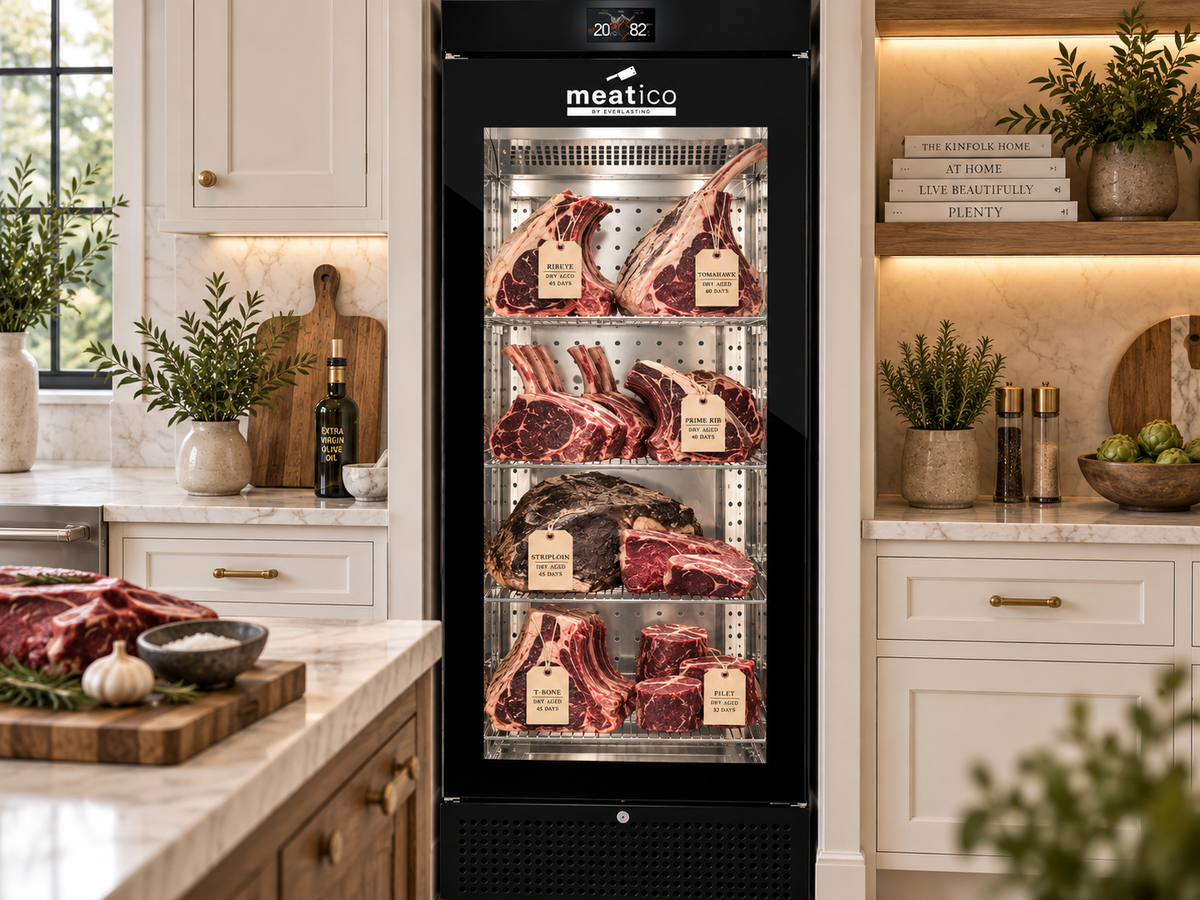
Also consider where the appliance will live. Some models are compact enough for smaller spaces, while full-height glass-front aging cabinets can become a striking visual feature in a gourmet indoor or covered outdoor kitchen. A beautifully stocked meat ager can be almost as impressive to look at as a wine cellar.
Is a Meat Ager Worth It?
That depends on what cooking means to you. If steak is something you occasionally throw on the grill, probably not. But if cooking is a hobby, if steak is one of your passions, and if you enjoy mastering techniques and creating food that goes beyond what you can easily purchase at the supermarket, a meat ager can be a fascinating addition to your culinary arsenal. It gives you something particularly valuable:
Control over the aging process itself. You choose the beef. You choose the aging period. You discover the flavor profile you prefer. And ultimately, you cook and serve something you helped transform from beginning to end.
From Steak Lover to Steak Maker
The appeal of dry aging isn't simply that it produces an exceptional steak. It's the experience of taking a remarkable ingredient and making it your own. For the home cook who is constantly asking, “What can I try next?”, a meat ager provides a whole new answer.
At The Culinary Outdoors, we believe the best cooking equipment doesn't simply make cooking easier—it expands what's possible.
A premium grill can change the way you sear. A pizza oven can change the way you make pizza. A smoker can introduce you to an entirely different style of cooking.
And a meat ager?
It can change the steak before it ever reaches the fire.